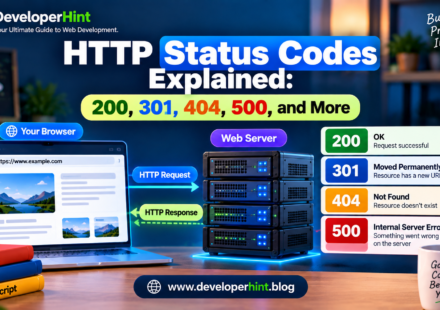
HTTP Status Codes Explained: 200, 301, 404, 500, and More

If you’ve ever landed on a page that just says “404 Not Found,” you’ve already run into an HTTP status code without necessarily knowing what it was. You’ve probably seen a few others too — 200, 301, 403, 500, showing…
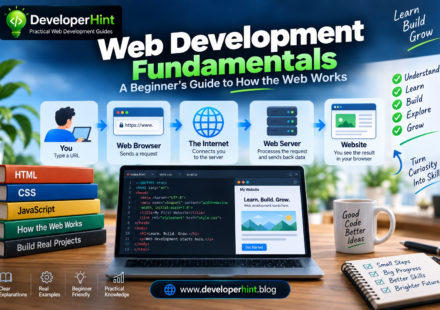
Web Development Fundamentals: A Beginner’s Guide to How the Web Works
HTML, CSS, JavaScript, browsers, servers, domains, hosting, APIs, databases, Git, frameworks — if you’re just starting out, the list of things people say you “need to know” can feel endless. The good news is that you don’t…
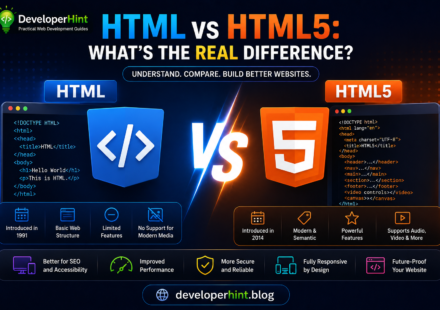
HTML vs HTML5: What’s the Real Difference?
If you’ve spent any time learning web development, you’ve probably run into both terms — HTML and HTML5 — often used like they’re two separate things you need to learn. They’re not. HTML5 is simply the modern version…

HTML Semantic Elements Explained: A Practical Guide (2026 Update)
HTML semantic elements give meaning to your web pages. In this guide, you’ll learn what semantic HTML is, why it’s important, and how to use semantic tags with real examples.
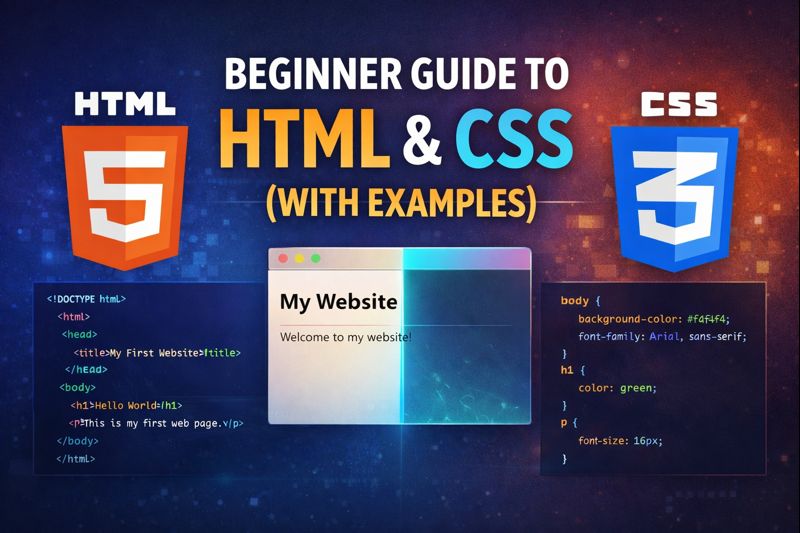
Beginner Guide to HTML & CSS (With Examples)
Learn HTML and CSS from scratch with simple explanations and examples. A beginner-friendly guide to building your first web page.
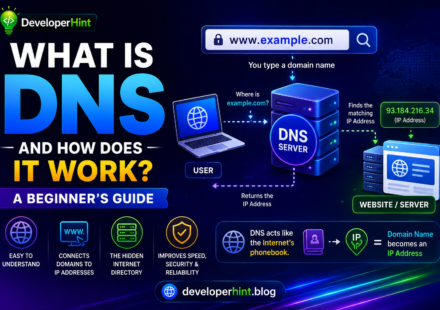
What Is DNS and How Does It Work? A Beginner’s Guide
Every time you type a web address and a website appears, something invisible and surprisingly complex is happening behind the scenes. Your browser doesn’t actually know where developerhint.blog lives on the Internet. Computers don’t…
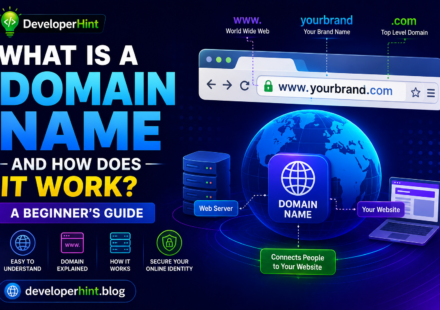
What Is a Domain Name and How Does It Work? A Beginner’s Guide
Every website you visit has a name. Google.com. YouTube.com. Developerhint.blog. These names feel simple and obvious — you type one in, a website appears. But behind that simplicity is an entire system that translates the name you type into a…