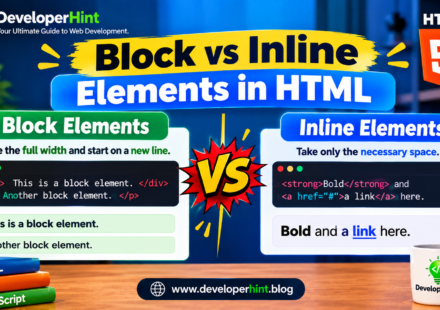
Block vs Inline Elements in HTML

Every element on a web page has a default display behavior, and the two you will meet first are block and inline, Block vs inline elements is one of those topics that looks trivial until a layout refuses to do what you want, you set a width on a link and…
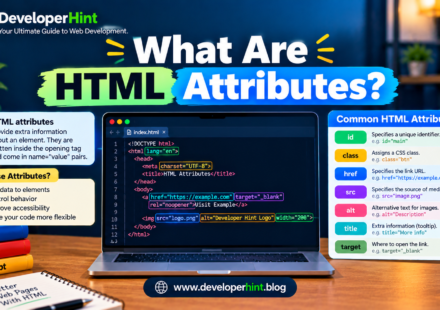
What Are HTML Attributes?
HTML attributes are extra pieces of information you add to an element to change how it behaves or how it is described. They are what turn a bare <a> tag into a working link, a plain <img> into a picture with a source, and a generic…
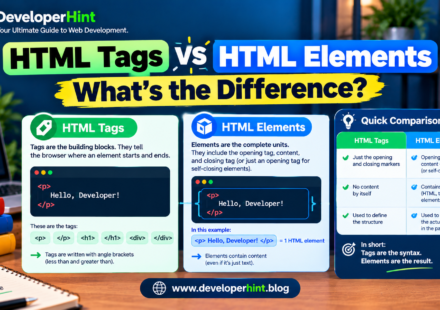
HTML Tags vs HTML Elements: What’s the Difference?
If you have spent any time learning HTML, you have probably heard the words tag and element used as if they meant the same thing. In casual conversation they often do, and nobody will correct you. But they are not identical, and the gap between them…
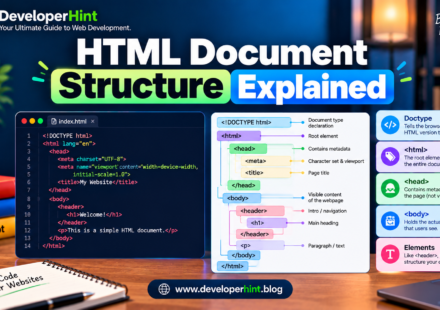
HTML Document Structure Explained
Every web page you have ever visited sits on top of the same basic skeleton. HTML document structure is the set of rules and conventions that tell a browser what a file is, where the metadata lives, and which parts are meant to be seen. It looks like…
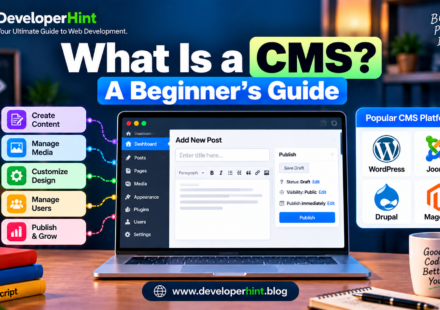
What Is a CMS? A Beginner’s Guide
A CMS, short for content management system, is software that lets you create, edit, and publish website content without writing a new HTML file every time you want to change something. You log into a dashboard, type your post in an editor, press publish,…
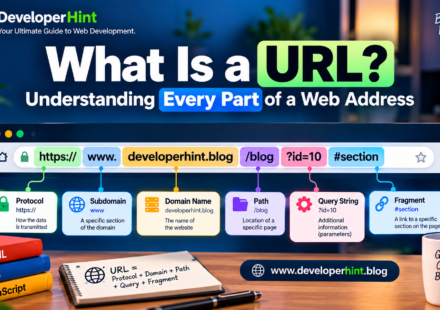
What Is a URL? Understanding Every Part of a Web Address
Type an address into your browser and a page shows up. Most people never look past that. But a URL is actually a small, tightly packed instruction, it tells the browser which protocol to speak, which server to find, which resource to ask for, and…
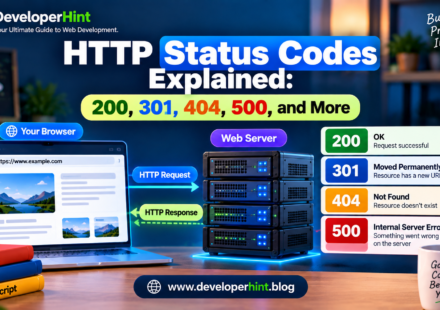
HTTP Status Codes Explained: 200, 301, 404, 500, and More
If you’ve ever landed on a page that just says “404 Not Found,” you’ve already run into an HTTP status code without necessarily knowing what it was. You’ve probably seen a few others too — 200, 301, 403, 500, showing…
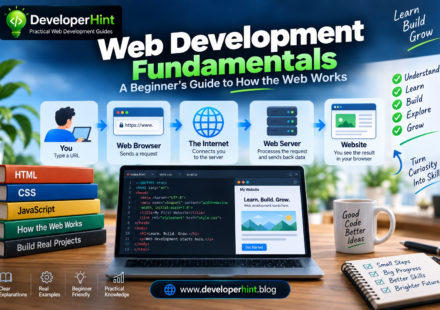
Web Development Fundamentals: A Beginner’s Guide to How the Web Works
HTML, CSS, JavaScript, browsers, servers, domains, hosting, APIs, databases, Git, frameworks — if you’re just starting out, the list of things people say you “need to know” can feel endless. The good news is that you don’t…
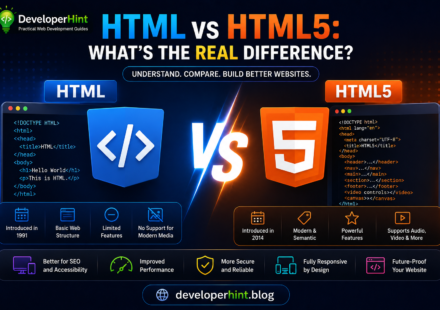
HTML vs HTML5: What’s the Real Difference?
If you’ve spent any time learning web development, you’ve probably run into both terms — HTML and HTML5 — often used like they’re two separate things you need to learn. They’re not. HTML5 is simply the modern version…

HTML Semantic Elements Explained: A Practical Guide (2026 Update)
HTML semantic elements give meaning to your web pages. In this guide, you’ll learn what semantic HTML is, why it’s important, and how to use semantic tags with real examples.