Introduction
Have you ever visited a website and noticed how fast it loads even when you’re far from its main server?
That speed often comes from something called a CDN (Content Delivery Network).
In this guide, you’ll learn:
- What a CDN is
- How CDN works step-by-step
- Why websites use CDN
- Real-world examples
- When you should start using one
Let’s break it down in simple terms.
What Is CDN?
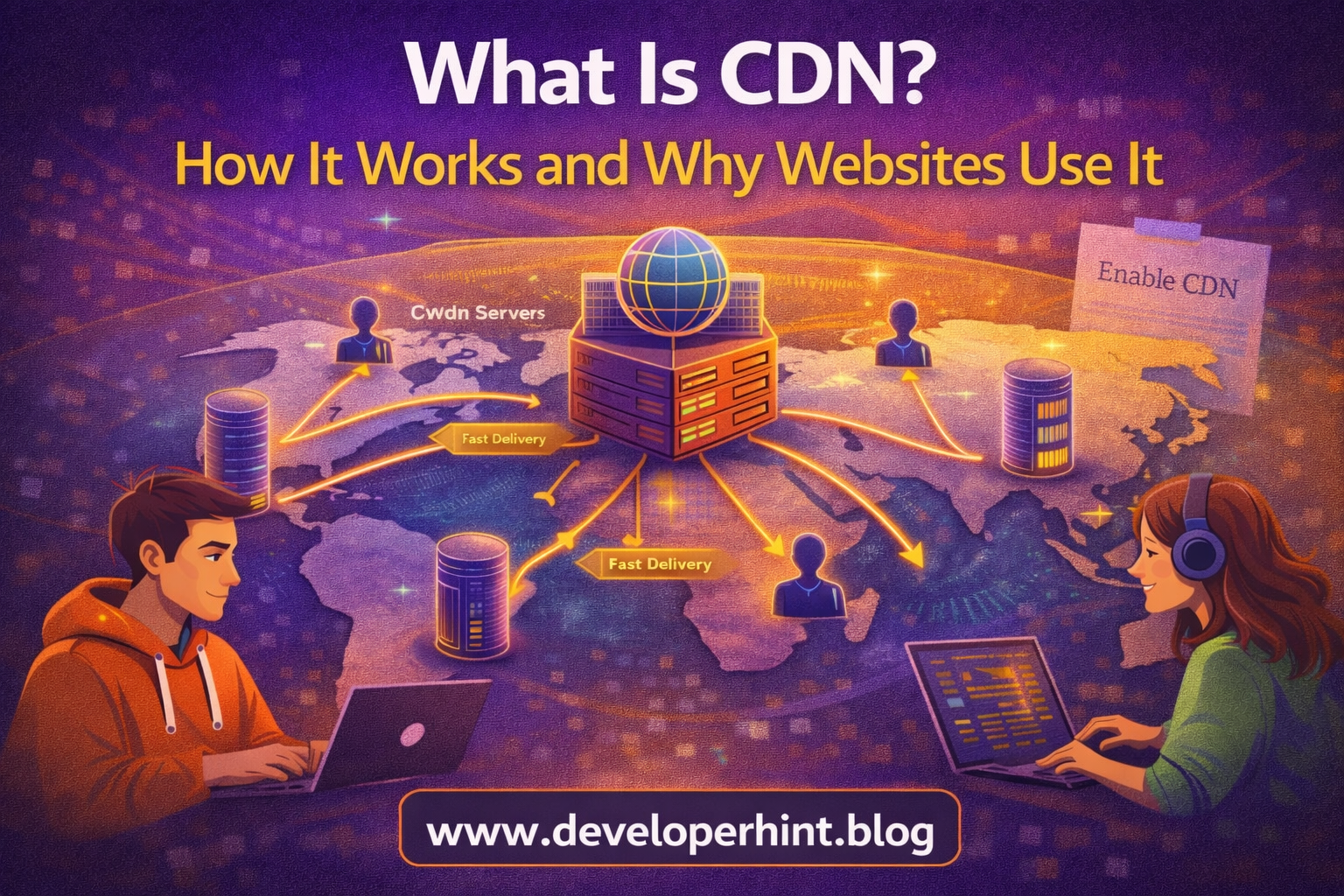
A CDN (Content Delivery Network) is a network of servers distributed across multiple locations around the world that deliver website content to users based on their geographic location.
Instead of loading your website from a single server in one country, a CDN delivers content from the nearest available server.
Simple Definition:
A CDN makes your website faster by serving content from the closest server to the visitor.
Why CDN Is Important
Imagine your website server is located in Germany.
If someone visits your website from Somalia or the United States, their browser must request data from Germany. That takes time.
With a CDN:
- Static content (images, CSS, JS, videos) is stored in multiple global servers.
- Visitors receive data from the closest server.
- Loading time is significantly reduced.
This improves:
- Website speed
- User experience
- SEO rankings
- Conversion rates
How CDN Works (Step-by-Step)
Let’s understand this practically.
Step 1: User Requests Website
A user types:
www.yoursite.com
Step 2: DNS Routes the Request
If CDN is enabled, the request goes to the CDN network instead of directly to your main server.
Step 3: Closest Server Responds
The CDN identifies the nearest server (called an Edge Server) and delivers cached content.
Step 4: Faster Loading
Because the server is geographically closer, latency is reduced and the website loads faster.
What Does CDN Cache?
Typically, CDN caches:
- Images
- CSS files
- JavaScript files
- Videos
- Fonts
- Static HTML
Dynamic content (like logged-in dashboards) may still load from your main server.
Real Example
Without CDN:
- Your server = London
- Visitor = Nairobi
- Data travels long distance → slower speed
With CDN:
- CDN has server in Nairobi
- Visitor gets content locally
- Website loads much faster
Key Benefits of Using a CDN
1. Faster Website Speed
Lower latency = better performance.
2. Better SEO
Google considers page speed as a ranking factor.
3. Improved Security
CDNs provide:
- DDoS protection
- Traffic filtering
- SSL support
4. Reduced Server Load
Your main server handles less traffic because CDN distributes it.
5. Global Reach
Perfect for international audiences.
Should You Use a CDN?
You should use a CDN if:
- Your audience is global
- Your website has heavy images or media
- You care about SEO
- You run an eCommerce store
- You want better performance
For modern websites, CDN is no longer optional, it’s essential.
CDN and Hosting (Important)
Many hosting providers now include built-in CDN services.
For example:
The Business Web Hosting plan at Hostinger and all higher-tier hosting plans include free Hostinger CDN, helping you boost performance instantly.
Plus, you can get an extra 20% discount when signing up through this link.
If you’re starting a serious website, choosing hosting with built-in CDN saves money and setup time.
Quick Comparison: With vs Without CDN
| Feature | Without CDN | With CDN |
|---|---|---|
| Speed | Slower globally | Fast worldwide |
| Server Load | High | Distributed |
| Security | Basic | Advanced protection |
| User Experience | Inconsistent | Smooth |
Basic Example: Enabling CDN on WordPress
If your hosting supports CDN:
- Login to hosting dashboard
- Enable CDN from Performance settings
- Clear cache
- Test speed using tools like GTmetrix or PageSpeed Insights
No coding required in most cases.
Final Thoughts
A CDN is one of the simplest yet most powerful ways to improve your website’s speed, security, and global performance whether you run a blog, portfolio, SaaS, or eCommerce site, using a CDN gives you a competitive advantage.
At Developer Hint, we simplify complex web concepts so you can build faster, smarter, and more professional websites and understanding CDN is a major step toward mastering modern web performance.
Discover more from Developer Hint
Subscribe to get the latest posts sent to your email.
Content Disclosure
This content was created with the assistance of AI tools and thoroughly reviewed, fact-checked, and refined by a human editor to ensure accuracy, clarity, and usefulness for readers.Advertisements
